Thursday, June 6, 2013


Friday, May 31, 2013
SE MASS STEM Resource Fair for Educators Attracted 300

*Showing and telling* about the American Chemical Society resources that are available for K-12 educators (scroll down to see these) and Northeastern Section of the American Chemical Society programs for students and educators at the Southeastern Mass Science Technology Engineering Math (STEM) Expo at Bridgewater State University this afternoon (May 23, 2013).
The following is an excerpt from http://www.connectsemass.org/stem/
Regional STEM Meetings - Register Today!
Join STEM stakeholders from the schools, government, industry, and community to find resources and develop plans to strengthen STEM programming in your region. Upcoming SE MA STEM Network regional meetings will take place:
- Thursday, February 13, 2014 - Cape Cod Community College - Register here for the February 13 meeting
- Tuesday, February 25, 2014 - Weymouth High School - Register here for the February 25 meeting
- Wednesday, March 5, 2014 - Jordan Jackson Elementary School, Mansfield - Register here for the March 5 meeting
- Tuesday, March 25, 2014 - Old Rochester Regional High School - Register here for the March 25 meeting
Save the date for the STEM Resource Fair for Educators on May 21, 2014, at Bridgewater State University.
STEM Resource Fair for Educators Attracted 300
More than 300 attendees and exhibitors came together at the SE MA STEM Network's first Resource Fair for Educators on May 23, 2013, at Bridgewater State University. Participants attended workshops such as "Using Marine Animal Rehabilitation to Support STEM Goals" and "Sports and Engineering" to walk away with inspiring STEM lessons to incorporate into the classroom. Attendees also learned about STEM resource providers such as the Green Schools Project, National Institutes for Health, and NOVA Education. Resource materials available from the SE MA STEM Network included our Corporate Partners program, our SE MA STEM Directory, how to establish a STEM Education in your community, and our STEM Career Exploration website.
Special thanks to STEM Resource Fair Sponsor:

Contact Us: Questions regarding the STEM Resource Fair for Educators may be directed to STEM Coordinator Katherine Honey, 508.316.1480
Tuesday, May 28, 2013
Improved quantification of sulfur compounds in the atmosphere by hyphenated GC-FPD-PID
246th ACS National Meeting, Indianapolis, IN
Document ID: 15413, Paper# 251
Program Area: ENVR Division of Environmental Chemistry

Symposium Title: (ENVR014p) Air Monitoring
INSTITUTIONS
1. PID Analyzers, LLC, Sandwich, MA, 02563, United States
AUTHORS


1. Jack N. Driscoll1 , PID ANALYZERS, LLC, 2 Washington Circle #4, #4, Sandwich, Massachusetts, 02563, United States
2. Jennifer L. Maclachlan1 , PID Analyzers, LLC, 2 Washington Circle, #4, Sandwich, MA, 02563, United States
 Title: Improved quantitation of sulfur compounds in the atmosphere by hyphenated GC-FPD-PID
Abstract Body: The flame photometric detector (FPD) for gas chromatography has a high selectivity for sulfur compared to carbon. When a S compound is burned in a hydrogen rich flame, the excited species S2* is formed with the emission of blue light at 394 nm when it returns to the ground state. The response for various sulfur compounds then is proportional to the square root of the sulfur compound and varies considerably with structure. The quantitation of sulfur compounds is made more difficult because of the limited dynamic range of the FPD (103) and poor detection limits (20-50 ppb) for sulfur compounds. The photoionization detector (PID) responds to most volatile organic compounds and most sulfur compounds so it is a non selective detector. However, it has a linear dynamic range > 107and low or sub ppb detection limits for most compounds. If we combine the characteristics of these two detectors, we can eliminate the disadvantages of linearity, detection limits and selectivity and have an ideal detector combination PID/FPD.
Tuesday, May 7, 2013
Real-Time Detection #RTD

PO 132 PALAIS 516d
Real-Time Detection #RTD
 |
| L to R: P.Smith, Session Arranger & Presenter, J. Driscoll, morning session presenter and K. Brown, afternoon presenter |
WEDNESDAY May 22, 2013 | 1:00 P.M.-4:30 P.M.
Topic:
Real-Time Detection Systems technical program by the Real-Time Detection Systems Committee #RTDSC
Real-Time Detection Systems technical program by the Real-Time Detection Systems Committee #RTDSC
Arranger: P. Smith, OSHA, Sandy, UT. Moderator: W. Mills, Mills Consulting Inc., Oak Park, IL.Monitors: B. Fraser, Canadian Department of Health, Ottawa, ON, Canada; S. Barnes, Chevron, Bakersfield, CA.
- 1:00 p.m.-1:30 p.m.
SR-132-08 A Direct-Reading Exposure Assessment Method Using a Real-Time Location System (RTLS) and Wireless Personal Chemical Sensor. K. Brown, K. Mead, P. Shaw, R. Kovein, NIOSH, Cincinnati, OH; R. Voorhees, University of Cincinnati, Cincinnati, OH; A. Brandes, MeasureNet Technology, LLC, Cincinnati, OH. - 1:30 p.m.-2:00 p.m.
SR-132-02 Whole-Air Analysis Using Field-Portable Gas Chromatography. P. Smith, OSHA, Sandy, UT. - 2:00 p.m.-2:30 p.m.
CS-132-03 Comparison of Side-by-Side Particulate Sampling Using a Size-Selective Real-Time Aerosol Monitor, and a Filter Cassette Using Gravimetric Analysis. M. Baquiran, J. Lang, M. Finn, ENVIRON International Corporation, Chicago, IL. - 2:30 p.m.-3:00 p.m.
SR-132-04 Evaluation of the Continuous Personal Dust Monitors in the Context of MSHA’s Proposed Rule for Lowering Exposure to Respirable Coal Mine Dust. M. Cooper, Exponent, Menlo Park, CA; S. McCarthy, Exponent, Oakland, CA. - 3:00 p.m.-3:30 p.m.
CS-132-05 Accurately Measuring Nanoparticles in the Field. T. Grillo, Kanomax USA, Inc., Andover, NJ. - 3:30 p.m.-4:00 p.m.
SR-132-06. PhotoThermal Desorption of Toluene from Single-Walled Carbon Nanotube and Activated Carbon Sorbents. E. Floyd, C. Lungu, University of Alabama at Birmingham, Birmingham, AL. - 4:00 p.m.-4:30 p.m.
SR-132-07 A Comparison of Benzene Detectors for Use by Refinery Operations. T. Jackson, Phillips 66, Oklahoma City, OK. - WITHDRAWN: CS-132-01 Response to Unexpected Presence of VOCs in an Underground Nuclear Repository. J. Doherty, Nuclear Waste Partnership, Carlsbad, NM.
Click here to view the morning session of Real-Time Detection Systems Programming at this meeting
Monday, May 6, 2013
Real-Time Detection Methods and Systems for Extremely Dangerous Atmospheres and Emergency Response
PO 129 #AIHCE Wednesday may 22, 2013

Real-Time Detection Methods and Systems for Extremely Dangerous Atmospheres and Emergency Response
WEDNESDAY | 10:00 A.M.-NOON
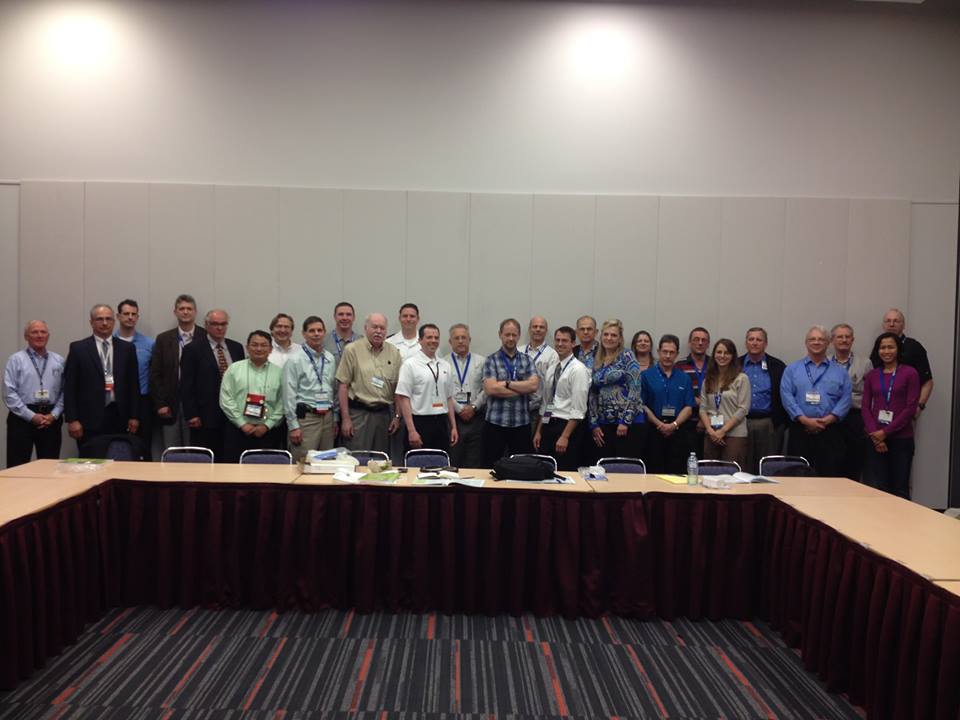 |
| Real-Time Detection Systems Committee Meeting in Montreal 5/20/13 |
Topics:
Incident Preparedness & Response, Real-Time Detection Systems, #RTDSC
Incident Preparedness & Response, Real-Time Detection Systems, #RTDSC
Arranger/Moderator: P. Smith, OSHA, Sandy, UT. Arranger: J. Hill, Alameda, CA. Monitors: P. Owens, Shell Martinez Refinery, Martinez, CA; J. Wallace, ExxonMobil Production Company, Houston, TX.
CS-129-01 Counterterrorism and Industrial Hygiene: Applying Real-Time WMD Detection Technologies and Countermeasures in a Mass Transit Environment — A Case Study. C. Burrus, MTA/NYC Transit, Brooklyn, NY.
SR-129-02 Development of Methods for a Portable Gas Chromatograph-Mass Spectrometer for Rapid On-Site Measurements of Fumigants. M. Elliott, A. Foote, NIOSH, Cincinnati, OH.
CS-129-03 Cold Vapor Atomic Fluorescence Spectroscopy: A New Approach to Mercury Vapor Analysis. G. Rowe, Arizona Instrument LLC, Chandler, AZ.
SR-129-04 An Air Analysis Method for Extremely Toxic Atmospheres. J. Driscoll, PID Analyzers, LLC, Sandwich, MA; P. Smith, OSHA, Salt Lake City, UT.
Thursday, April 25, 2013
Frederick F. Spaziani Memorial Award 2013
Frederick F. Spaziani Memorial Award 2013

RECOGNITION DAY
The Frederick F. Spaziani Memorial Award 2013 scholarship is awarded by a Suffolk University faculty committee to one full-time and one part-time student in the Chemistry, Physics and/or Engineering program on the basis of merit.
 2013 awardees are both on the Astrophysics Track: Casey Myers and Elizabeth Rodriguez. Jack Driscoll will be there to award Casey and Elizabeth tonight, April 25, 2013 at the C. Walsh Theatre.
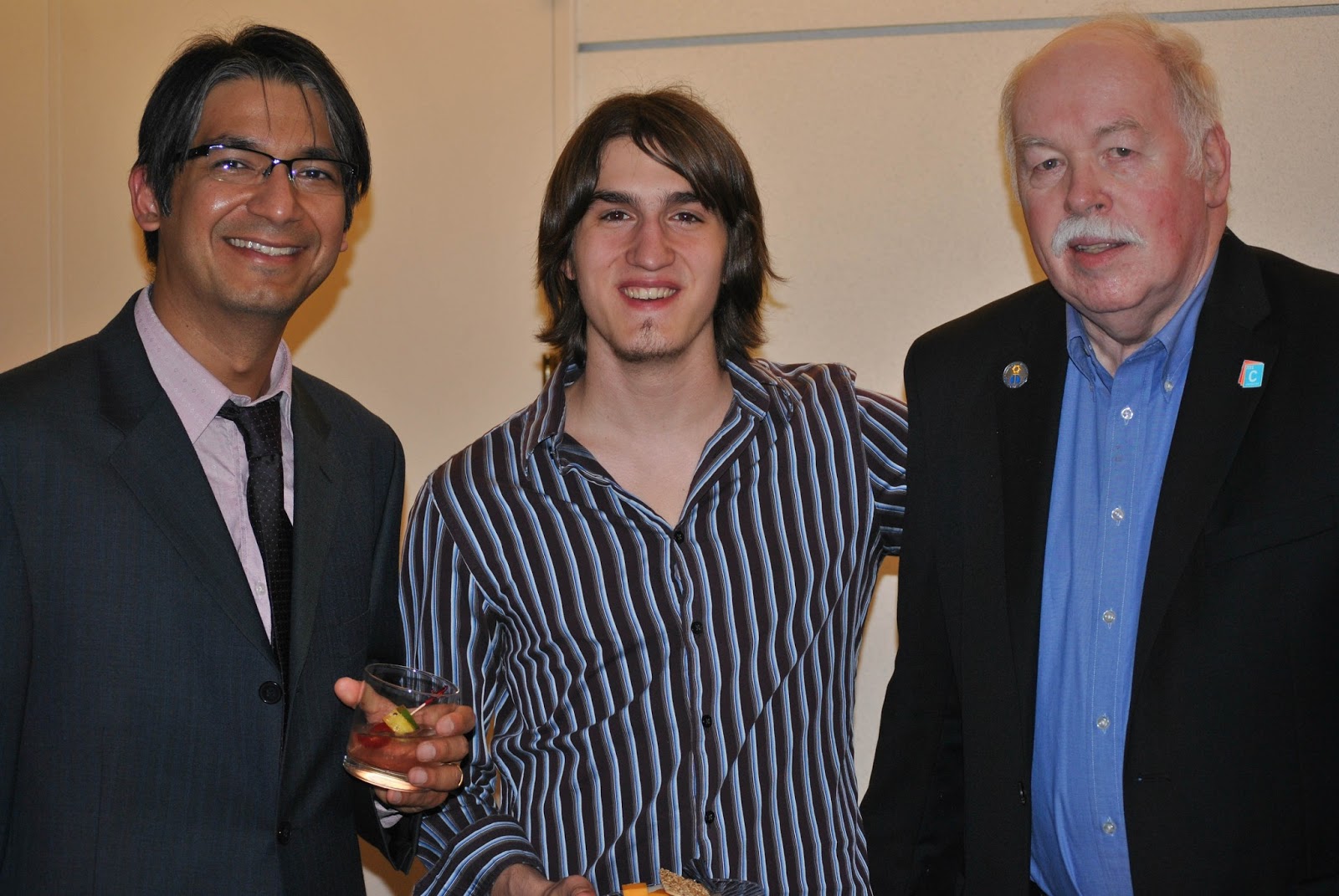
Prashant Sharma, Chair Physics Dept at Suffolk U, Casey Myers, 2013 Spaziani Memorial Award recipient and Jack Driscoll, Spaziani Memorial Award Administrator.
Both award recipients submitted essays that illustrated their creative use of physics.
Casey employed some culinary physics to save prep time while working as a pizza chef in high school. "Everything we see around us in the natural world can be explained using physics. Physics is my passion because the world is my event, and I will always ask the question why".
This is the second consecutive year that Elizabeth is a Spaziani award recipient. Elizabeth's essay details her experience as a Suffolk University teaching assistant who developed curriculum and led an astrophysics field trip for non-science majors to the Suffolk University Maine Campus Friedman Field Station. In her words: "In the end, most of the students were able to find most of the objects on the list by using all of the equipment and trying to be creative with the telescopes in order to achieve this".Congratulations to Casey and Elizabeth! We are honored to present each of you with the 2013 Spaziani Memorial Award.
 Fred Spaziani co-founded of HNU Systems, Inc. with Jack Driscoll in 1973. Together they developed the first commercial photoionization detector that is now the most important method for measuring volatile organic compounds. Fred left us at too early an age and the award is to help students in science or engineering reach their full potential.
Saturday, April 13, 2013
Climate Science: The Conversation at Cambridge Science Festival Monday April 15, 2013

Join us this Marathon Monday evening April 15, 2013 at the NESACS Science Cafe at the Cambridge Science Festival. This is the second consecutive year that NESACS is participating at the festival. Last year National ACS had an NSF grant and we worked with them on The Chemistry of Food Science Cafe. This year we are participating in the Science Communication Day at the festival and together with the festival organizers, decided to explore how to communicate scienceformally and informally using an example like climate science, as the basis for the conversation and a science cafe format as the communication mechanism.
This is our program description: A meteorologist, a journalist, and a climate scientist walk into a bar and...Seriously though, how do we best communicate scienceformally and informally? And how does it all get applied in a specific example like Climate Change?Join in the discussion with our panel of experts: Dave Epstein, Brian Helmuth and Peter Thomson. This panel discussion will be facilitated by Jack Driscoll, NESACS PR Chair.
Event is hosted by: John Harvard's Brew House. 33 Dunster St, Harvard Sq in the back room. Event occurs Monday April 15, 2013 from 7pm-9pm. Cost is free to attend. Cash bar is 21+. Please RVSP using the link below if you plan to attend because seating is limited.
A quick note about each of the panelists: for more information on each of them, use the links to see their bio info. Dave Epstein is a meteorologist who worked in the Boston media (Channel 5) for sixteen years and blogs for The Boston Globe. We were introduced to Brian Helmuth, our Climate Scientist, through Pam Mabrouk, the NESACS Women Chemists Committee Chair. Peter Thomson is with NPR and is the Environment Editor for The World who happens to have a passion for climate science.
Here is the online flyer is below and here is the RSVP link. We hope you can join us and help us make this a robust and informative conversation about communicating science.
Subscribe to:
Posts (Atom)
Wielding social media for effective science communication
ABSTRACT SYMPOSIUM NAME: Combatting Science Mis- and Dis-Information ABSTRACT SYMPOSIUM PROGRAM AREA NAME: CINF CONTROL ID: 3910009 PRES...

-
 The Northeastern Section of the American Chemical Society celebrated National Chemistry Week 2015 in the Boston area at ...
 -
 This presentation has been accepted for the technical program of the 245th ACS National Meeting that will be held in New Orleans, Louisiana...
 -
 Barnstable residents, John Driscoll and Jennifer Maclachlan, a dynamic father-daughter team who own and operate PID Analyzers, LLC are in ...