Thursday, November 8, 2012

PID then and now

HNU photoionizers: The pinnacle of performance and reliability for detecting VOCs
Thirty nine years ago, Jack Driscoll founded HNU Systems, Inc., commercialized the technology of photoionization and simultaneously introduced the world's first hand-held photoionizer.  The first photoionization detector (PID) application in 1973 was for leak detection of vinyl chloride monomer. 


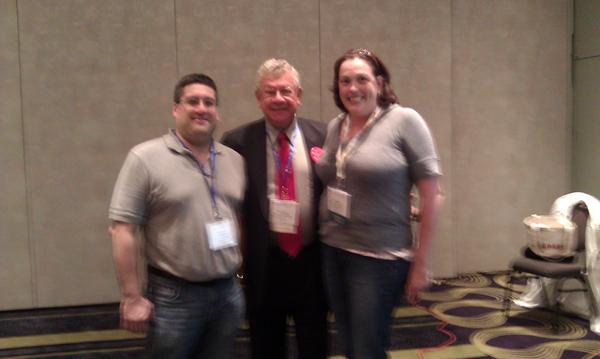
The Model 102+ is a considerably upgraded replacement for our Model PI101, HW101, DL101, 101N, and ISPI101 (analyzer group photo above). It has enhanced features such as a faster response time, extended range, elimination of any moisture sensitivity, capability of having up to 4 sensors plus a ppb range, and improvements such as a library of compounds, pump and datalogging. 


  • The Model 102 Snap-On PID™ Photoionization Analyzer is a single piece, hand-held unit for the measurement of organic and inorganic species that can be ionized by the UV lamp (9.5, 10.6 & 11.7).     
This includes the choice of one (1) Snap-On Module (9.5, 10.2, 10.6, 11.7 eV lamp), Operator's Manual, and Rechargeable Nickel Metal Hydride Battery. 


General Applications

Agriculture: Fumigant residues
Arson Investigations: Residual accelerants
Chemical Clean-up: Hazardous materials (organic/inorganic)
Chemicals: Toxic gases, vapors
Electronics: Doping gases, trichloroethylene
Environmental: Surveys, hazardous waste, fugitive emissions
Food & Feed Processing: Hexane residues, leaks
Glass reinforced plastics: Styrene w/o methyl methacrylate interference
Headspace: Hydrocarbons in soil and water
Industrial Hygiene: Workplace monitoring, surveys, leak detection
Toxicology Research: Toxicology, chamber monitoring
Machine: Degreasing solvents
Nylon Manufacturing: Carbon disulfide without H2S interference
Packaging: Residual solvents, monomers
Paper & Pulp: Reduced sulfur compounds
Paper Coating: Solvents
Medical/Hospital: Ethylene Oxide, formaldehyde, anesthetic gases
Pipe Manufacturing: Coating solvents
Plastics: Monomer leaks, residues
Printing: Toluene, other ink solvents
Refineries: Aromatics, sulfur compounds, fugitive emissions
Semiconductor: Arsine, phosphine, hydrogen sulfide, boron, tribromide
Textile: Dimethyl formamide leaks, benzene vapors


Specifications


Species measured:
Organics (VOCs) and inorganic species that can be ionized by the UV lamp (9.5, 10.6, 11.7)
Sensor(s):
PID + optional ppb range, optional 1-3 additional sensors can be added
Precision:
+/- 1% of reading
Response time:
<1 90="90" font="font" response="response" sec.="sec." to="to">
Sample flow rate:
> 0.2 LPM
Span Drift:
<2 24="24" font="font" hours="hours" over="over">
Range:
0.1 to 3000 or to 30,000 ppm with dilution probe
Linear Range:
To 3,000 ppm direct reading
Power consumption:
< 1 watt maximum
Dimensions:
10'' L x 3'' W x 2.25'' D
Weight:
1.9 pounds
Instrument operating conditions:
5-40 degrees C, 0-95% RH (non-condensing)
Performance:
Isobutylene Referred
Battery operated: - > 10 hours of operation

Features
Snap on Heads
Unique Snap on Heads are available only from PID. For the model 102, the lamps are in Snap on Heads that are optimized for each lamp. The readout unit recognizes the head type and calibration factors when the heads are interchanged.

Sensors
Optional ppb range for PID, capable of adding 1-3 optional sensors such as 30+ Electrochemical sensors, IR (4) or Thermal Conductivity Detector or Combustible Gas (CG). 

Lamps
Our 11.7 lamp is the only stable one available as a result of our development of the first 11.7 eV lamp nearly 30 years ago. Our 10.2/10.6 eV lamps remain the best in the business since we developed them over 30 years ago.

Headspace Software
The accuracy of VOC measurements in soil and water is greatly improved with the built in software method. No operator interpolation is required.

Single piece construction
The single piece construction (when the head and readout units are snapped together) of ABS plastic is very rugged and durable

Ease of calibration
The two point calibration for the PID uses an electronic zero (no zero gas needed) and a span gas. The time to calibrate is about 10 seconds. The Cal button is located on the main menu for ease of use. Jack Driscoll leads the user through the simple calibration procedure. 

Datalogging
Manual or automatic datalogging (7,000 points) is available. The 102 has a built in real time clock. Viewer software (Windows 98-XP compatible) comes with the 102
Library
There are libraries for the 9.5, 10.7 and 11,7 lamps that are easily accessible. There are more than 300 response factors built into the 102
Display
Our 2 line by 16 character display can be backlit. The upper display and the bottom display provides the Lamp eV, units, alarm and logging mode.
ADC
Our 16 bit ADC provides a resolution of 1 part in 64,000 and our signal algorithm minimizes noise by signal averaging in the msec range
Programmable Voltage output
0-1VDC


Stay up to date with us and *like* us on Facebook

Could it Be? Halloween without Snow?

Rascal, Renegades Mascot mummified

Guest blog post by George Ruger

For anyone familiar with last year's Halloween event at Dutchess Stadium courtesy of the Hudson Valley Renegades, you know that it was right after the first, and biggest, snowstorm of the region. 

George Ruger, Councilor Mid-Hudson ACS


Not to be outdone in 2012, this year Halloween was preceded by Hurricane Sandy, or as some called her, the Frankenstorm.  While the storm left quite a mess to clean up, there was still time to stop briefly and reflect on the true meaning of Halloween- CANDY, with a little bit of Chemistry mixed in.
 

The event hosted over 1,000 attendees.  We had kids all dressed up and ready to get candy from about 20 vendors.  Many of the vendors were sponsors of various games during the season.  The primary sponsor, TEG FCU, made it all possible for the event to be free of charge to the public. 
TEG Credit Union employees, who were the primary sponsors of the event 


There was face painting, pumpkin and Renegades hats decorating, food, and a bouncy house of course.  Plus happy kids getting loaded up on sugar and chocolate, and so were some of the parents too!  

Our excellent Renegades staff, Vicky and Kristen


And what about the Chemistry you ask?  Well, the Mid Hudson section brought their own twist to the holiday, and showed some Chemistry in between giving out handfulls of candy.  There was the now classic pH testing of drinking water (pH of around 7) and soda (pH about 3)  Yes, that nice beverage to wash down all that sugary goodness is on the acidic side.  It may taste good, but not quite so good for your teeth.  Not so much for the rest of you either!  


We also had our chemical volcano- the good old baking soda and vinegar trick, with some added color of the Blood of the Dead!!  Ok, it was food coloring- Don't call OSHA or anything.  We tried various colors, red, green, blue, purple.  Purple is quite popular among kids.  Yellow- not so much.


Renegades staff fighting them ghosts

A new adventure for our Halloween event was the good old soda and mentos rockets experiment.  Sadly, they did not work very well.  They definitely work better at Summer Camp when it is warm out, not as much when the mercury drops.  See, there is always something to be learned about Chemistry- even during Halloween!

A special thank you to our hosts the Hudson Valley Renegades, and to our reporter on the scene and newest Chemistry Ambassador, Stefanie at HappyHudsonValley.com
We hope to see more people next year. 


Follow George Ruger on Twitter

Friday, October 26, 2012

*Science is Fun* with a Chemistry Ambassador

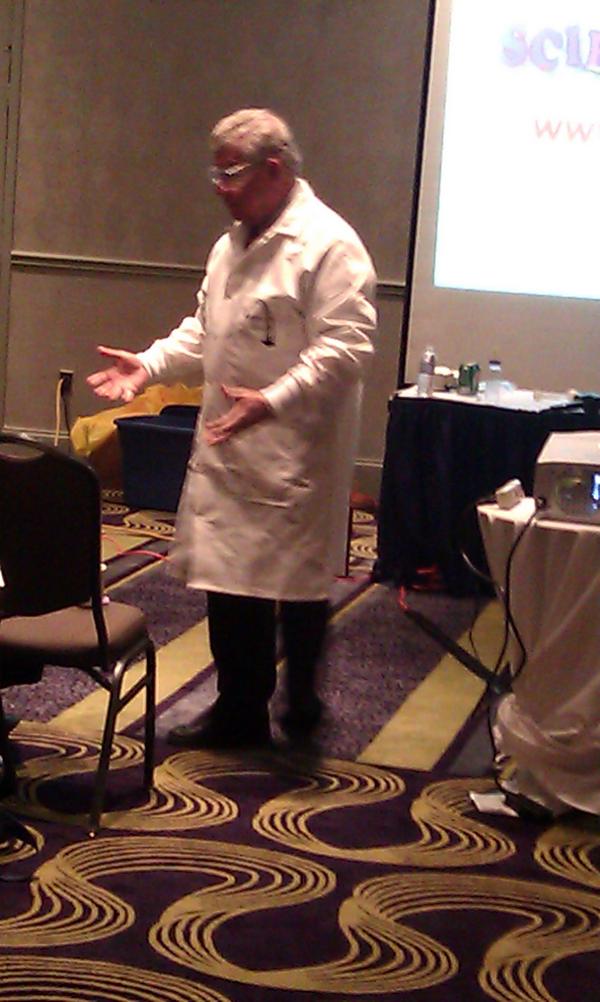
My new passion is live tweeting. Not only does it let others following along experience the event in real-time it also makes for an accurate and simple blog post after the event. This particular event was a High School Chemistry Teacher Workshop on Sunday September 30, 2012 in Rochester, NY led by American Chemical Society President Bassam Shakhashiri at the Northeast Regional Meeting of the American Chemical Society #NERM12. The nice part about Regional Meetings is their size and that they are contained in the host hotel. I stopped in the room to say hello to Bassam and to tell him that we are excited to have him coming to our local section (NESACS) for the twelfth consecutive year for National Chemistry Week to deliver the Phyllis A. Brauner Memorial Lecture. I absolutely had to stay for his workshop. I love listening to Bassam talk about chemistry education and outreach.  His enthusiasm is contagious and the energy in the room changes as attendees are mesmerized by his performance and inspired to answer his call to be chemistry ambassadors in their own communities. So I took my seat and listened and tweeted:

At  and already found Shakhashiri!  with  
Now on the 2nd floor of the Radisson  for Science is Fun demo with ACS President Bassam Shakhashiri

*Exhortations for good teaching and the joy of learning* is the title of Shakhashiri's lecture today at 

Sunday, October 14, 2012

Small Chemical Business Symposium Report at Nova 10/11/12

Award-winning symposium: Starting and Financing a Small Chemical Business
Photo by M.Z. Hoffman L to R: M. Morello, S. Vercellotti, J. Maclachlan, J. Sabol, S.Seelig, M. Chorghade, M. Bruce, J. Driscoll, T. Barton
This award winning symposium earned a ChemLuminary award at the 15th Annual Awards Ceremony September 10, 2013 in Indianapolis, IN  for Outstanding Collaboration between a Local Section and a Division: Northeastern Local Section and the Division of Small Chemical Businesses


Guest blog post by Jack Driscoll, PR Chair NESACS

Waltham, MA, Oct.11,2012- When Nova Biomedical Corp. in Waltham, MA agreed to host the 926th meeting of the Northeastern Section of the American Chemical Society (NESACS), we asked whether we could add an afternoon symposium to the venue and received an enthusiastic “yes”.  Our section, NESACS, is the largest of the 187 sections of the ACS with 7,500 members mostly in the greater Boston area. Most people are surprised to hear that.  The symposium program is described here.

 The program included a summary of the ACS programs for Entrepreneurs, programs available from MA Small Business Development Center, the startup of Nova in the nineteen seventies, conventional  and
SBA financing. Other subjects included advantages of executive education for Tech entrepreneurs, non dilutive and dilutive equity funding and an enlightening talk on the advantages of tweeting and other social media for marketing your businesses. Madeleine Jacobs, Executive Director & CEO of the American Chemical Society, the world’s largest scientific organization with 164,000 members talked about jobs and ACS programs for entrepreneurs that is described at http://www.acs.org/ei. We had a number of our NESACS  members describe “True Stories of Chemical Entrepreneurs”. The first described how he worked with Senators Kennedy and Dole to get government R&D funding for small businesses in the early 80’s. This became the NSF SBIR programs. Another, of the Movie “21” fame (MIT entrepreneurs develop a system to predict the cards in blackjack) and a serial entrepreneur describes four of her new ventures in biofuels, drug discovery etc.  The last true story was about of the start up of a contract drug discovery company. 
We had very lively discussions on financing small companies and how the Nova start up (no venture capital just bank financing) in the 1970’s could not be duplicated today.
We had 50 participants at this meeting with 30% NESACS members, 30% from Universities,  30% small business owners and a number of  patent attorneys. We also had Vivian Walworth, an entrepreneur, attend the seminar. On Thursday evening she received an award for being a 70 year member of the ACS. She is still very active in NESACS activities.
This symposium was organized by Dr. Mukund Chorgade, President,   Chorgade Enterprises  and immediate past chair of the Small Chemical Business Div. of the ACS, and Dr. Jack Driscoll, President, PID Analyzers, LLC, and Public Relations Chair of NESACS.

The symposium was sponsored by NESACS, the NESACS Government Relations Group,  the Small Chemical Business  Division of the ACS  and Nova Biomedical. 
Prepared by
Dr. Jack Driscoll,
Public Relations Chair of NESACS

Wielding social media for effective science communication

  ABSTRACT SYMPOSIUM NAME: Combatting Science Mis- and Dis-Information ABSTRACT SYMPOSIUM PROGRAM AREA NAME:  CINF CONTROL ID:  3910009 PRES...